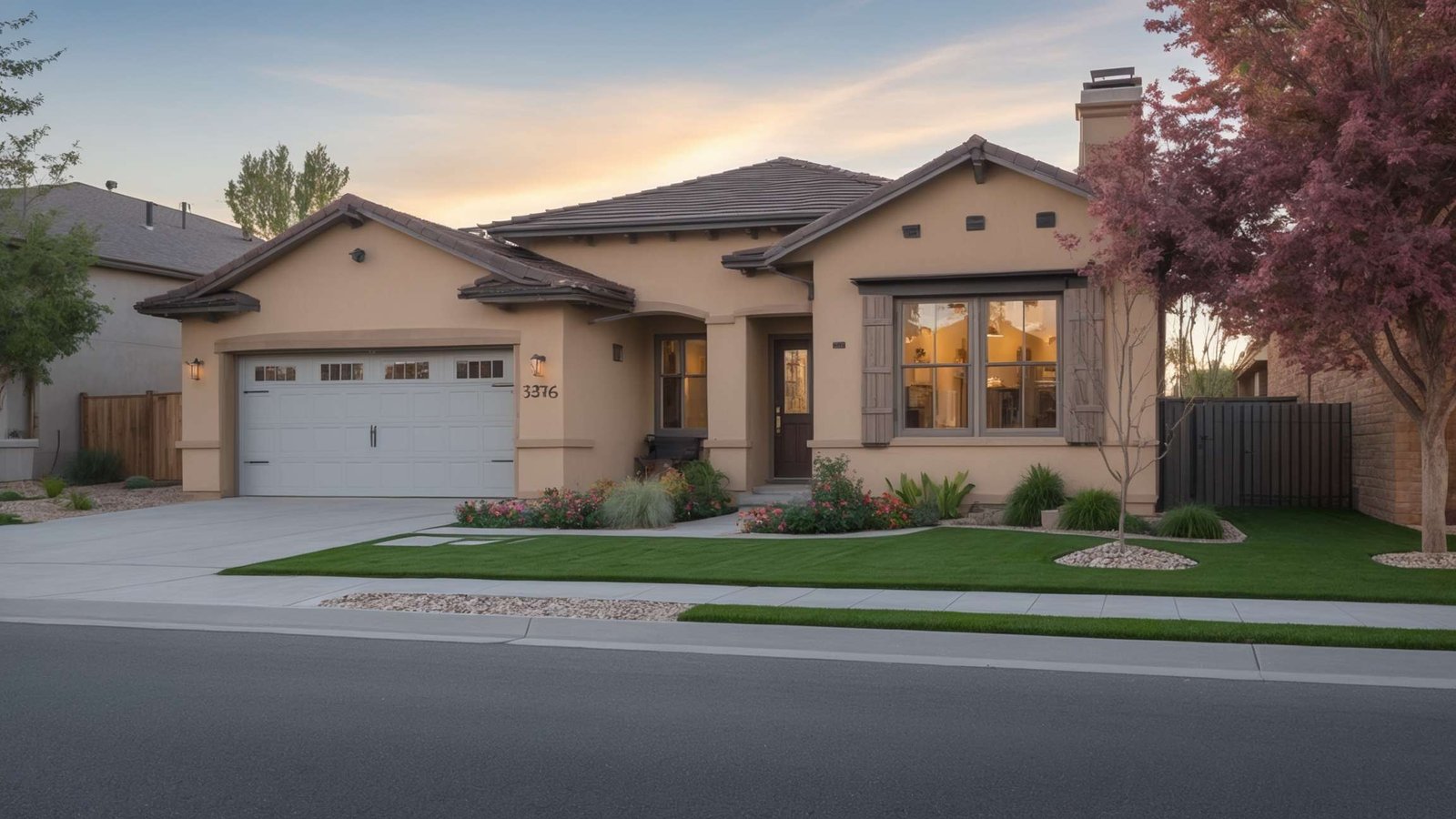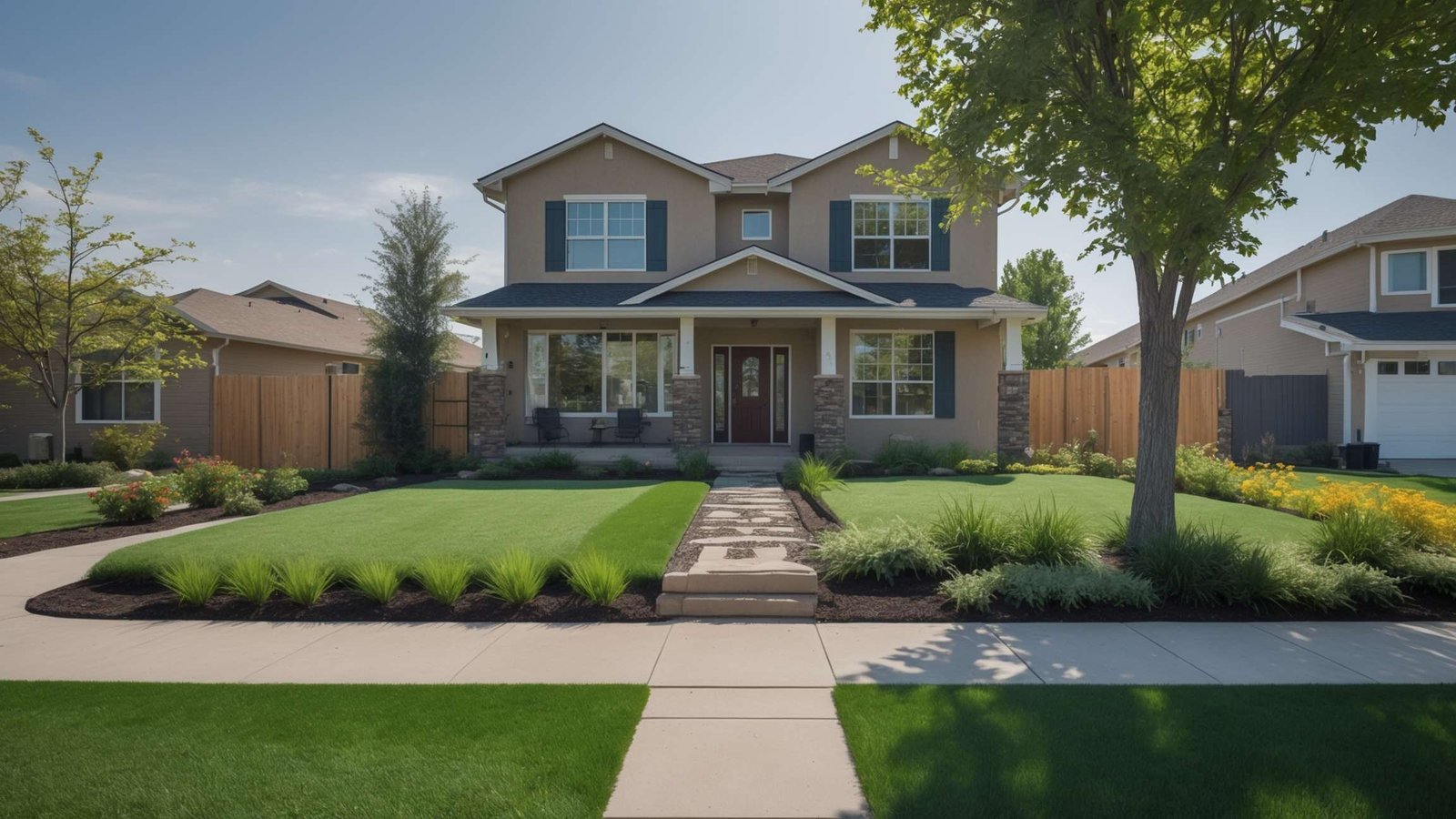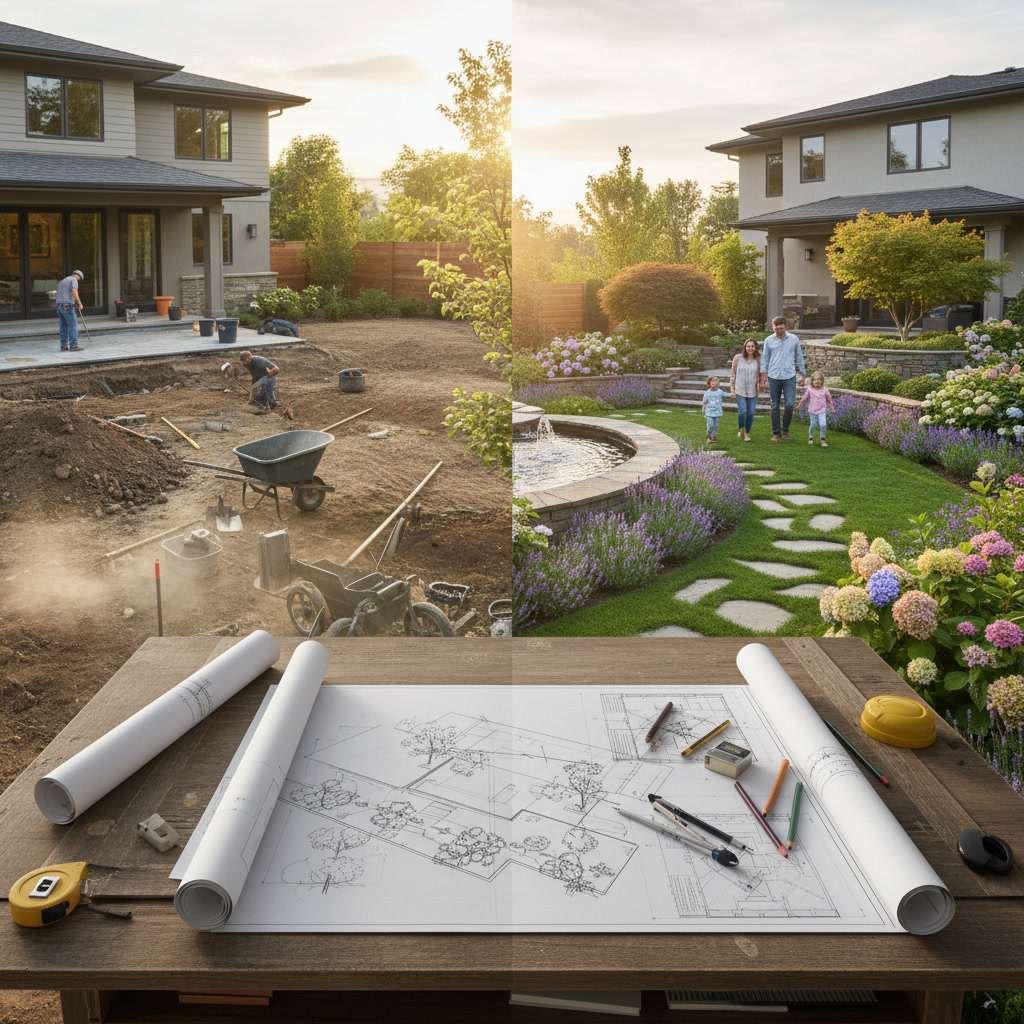
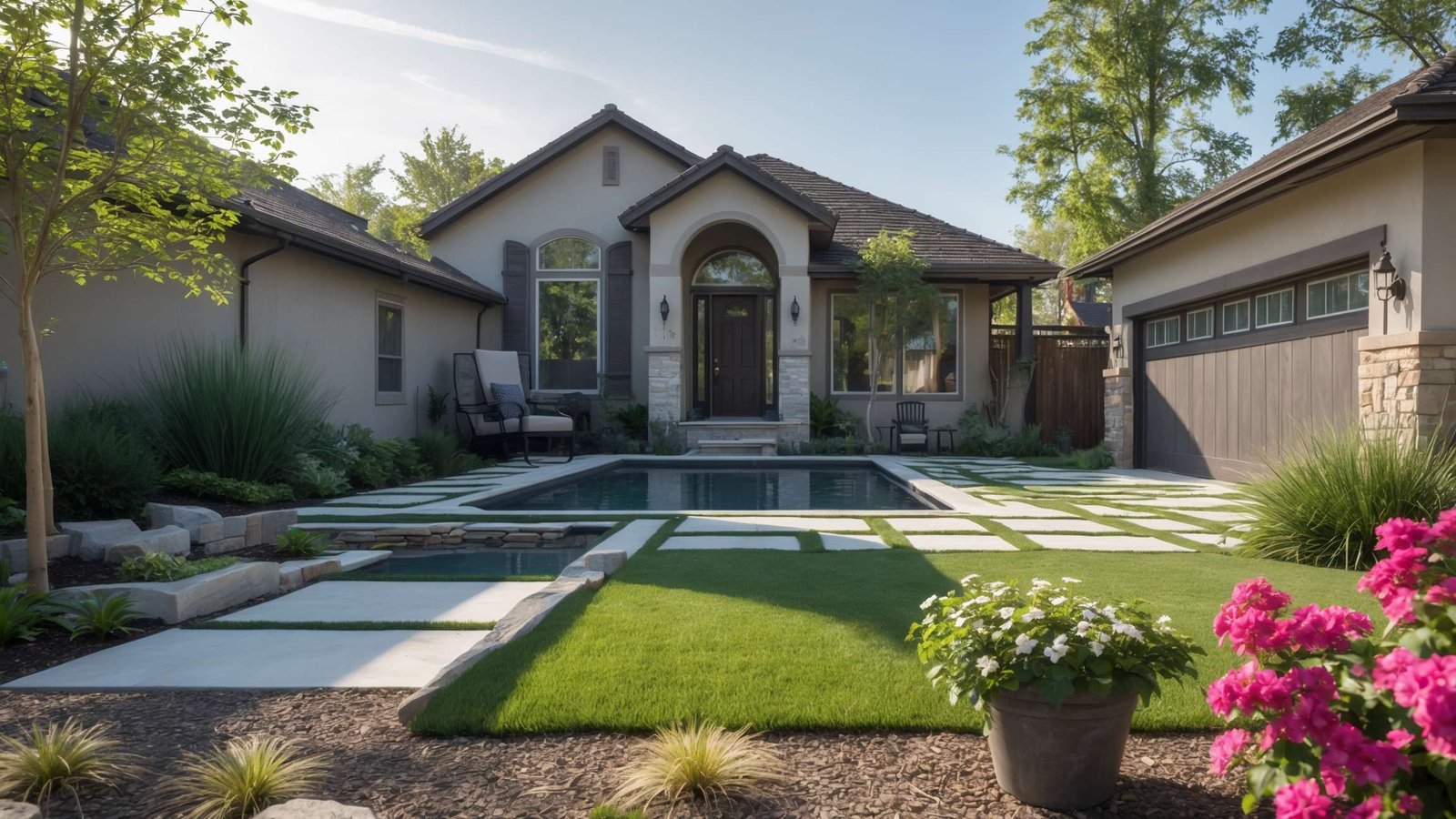
Your front yard is the first impression visitors and potential buyers get of your home. In Santaquin, where many properties feature traditional desert landscaping or simple lawn setups, adding a water feature can instantly set your home apart from every other house on the block. The best water feature ideas Santaquin homeowners are installing right now combine visual impact with water efficiency, creating focal points that work with Utah’s climate rather than against it.
This guide explores the most effective water feature designs for Santaquin front yards, covering styles that match local architecture, size considerations for different lot types, and practical installation factors you need to know before breaking ground.
Why Water Features Work So Well in Santaquin Front Yards
Santaquin sits in a unique climate zone where hot, dry summers meet cold winters. Water features designed for this environment need to handle temperature swings, limited water availability, and the visual expectations of mountain-valley living.
The right water feature adds three key benefits to your property. First, it creates a calming auditory element that masks road noise from Highway 6 and nearby streets. Second, it serves as an architectural anchor that ties together different landscaping elements. Third, it signals to buyers that the property has been thoughtfully upgraded, often adding $5,000 to $15,000 in perceived value depending on the installation quality.
Most successful installations in the area use recirculating systems that minimize water waste. A typical residential fountain uses 50 to 100 gallons of water initially, then only needs occasional topping off to replace evaporation losses. This makes them far more sustainable than many homeowners expect.
Pro Tip: Install your water feature on the same zone as your front yard irrigation system. This makes seasonal winterization much simpler and ensures you can easily top off water levels during dry stretches.
Pondless Waterfall Systems
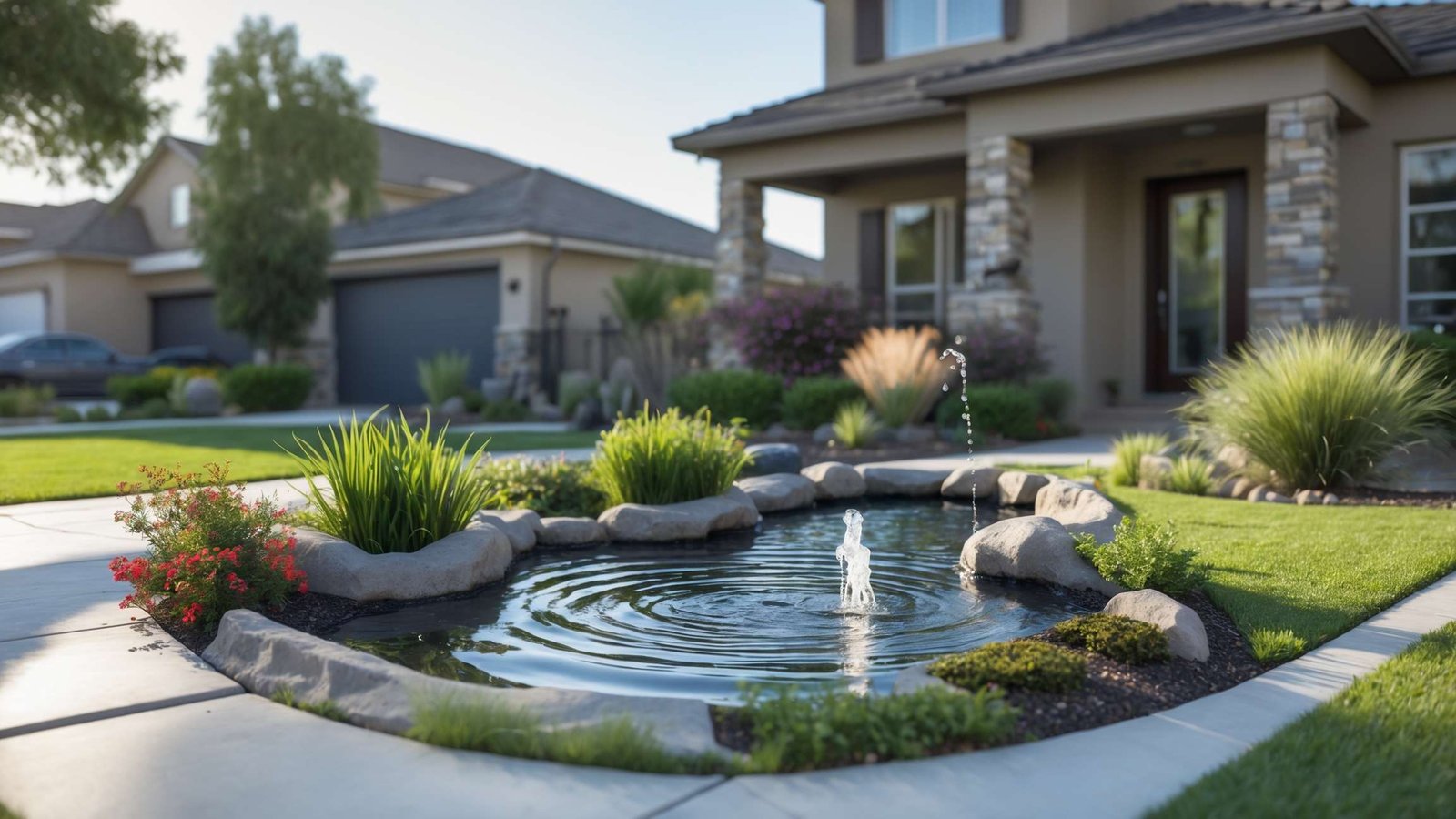
Pondless waterfalls have become the most requested water feature for Santaquin front yards over the past five years. The design circulates water over stacked stone or natural boulders, then disappears into a hidden underground reservoir instead of pooling in an open pond.
This style solves several concerns specific to Utah County homeowners. You avoid the maintenance headaches of algae control and mosquito prevention that come with standing water. Child safety improves since there’s no open water basin. Winter preparation is straightforward since you simply drain the reservoir and cover the pump.
Sizing Pondless Features for Front Yard Spaces
For typical Santaquin lots with 30 to 50 feet of front yard width, a pondless waterfall measuring 4 to 6 feet wide and 2 to 3 feet tall creates strong visual impact without overwhelming the space. Larger estate properties can accommodate waterfalls up to 8 feet wide with multiple tiers.
The sound level scales with height and water volume. A 3-foot fall produces gentle background noise, while a 5-foot cascade creates a more pronounced water sound that can be heard from the street. Consider which effect matches your goals for the space.
Stone Selection and Regional Aesthetics
Local basalt and sandstone blend naturally with Santaquin’s mountain backdrop and match the earth tones common in area architecture. Moss rock and weathered limestone create a softer, more aged appearance that works well with ranch-style and craftsman homes.
Avoid overly polished or brightly colored stone that looks imported and out of place. The goal is to make the feature look like it belongs in the Utah County landscape, not like it was transplanted from a tropical resort.
Tiered Fountain Designs
Classic tiered fountains remain popular for formal front yards and symmetrical landscape designs. These work especially well with colonial, Mediterranean, and traditional two-story homes common in newer Santaquin developments.
A two or three-tier fountain measuring 4 to 5 feet tall creates an elegant focal point when placed at the center of a circular driveway or along a main walkway. The structured shape provides visual balance and pairs well with formal plantings like boxwood hedges or rose gardens.
Modern materials have improved significantly in recent years. High-quality cast stone and reinforced concrete fountains can handle freeze-thaw cycles without cracking, lasting 20 years or more with basic maintenance. Budget $2,500 to $6,000 for a professionally installed tiered fountain including basin, pump, and electrical work.
Keep scale in mind. Oversized fountains that belong in commercial plazas look awkward in residential settings. For most homes, a fountain basin diameter of 5 to 7 feet provides presence without dominating the entire front yard.
Modern Minimalist Water Walls
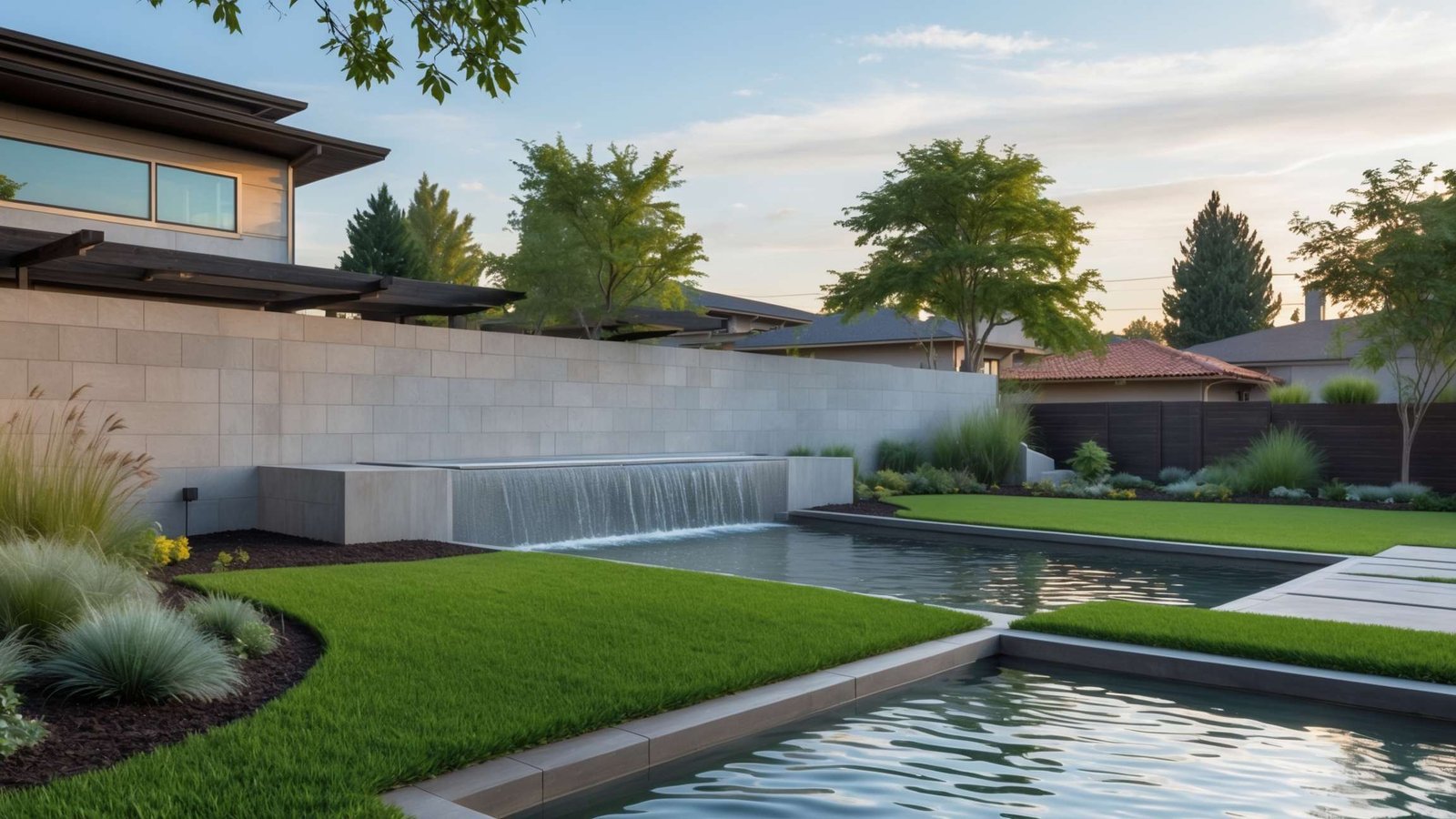
If your home features contemporary architecture with clean lines and stucco or metal siding, a modern water wall might be the right choice. These vertical features send water down a flat surface, usually stone, copper, or textured glass.
Water walls work particularly well in narrow spaces where traditional fountains won’t fit. A wall measuring 6 feet tall and 3 to 4 feet wide can tuck beside an entryway or fill a corner planting bed without requiring the footprint of a waterfall or basin fountain.
The visual effect is sophisticated and understated. Water sheets down the surface in a thin film, creating subtle movement and sound without splashing. This style appeals to buyers looking for modern upgrades and contemporary design elements.
Installation costs run higher than basic fountains due to the engineering required for even water distribution. Expect to invest $4,000 to $8,000 for a custom water wall including materials, pump system, and professional installation.
Key Takeaway: Match your water feature style to your home’s architecture. Traditional homes need classic designs, while contemporary structures call for modern minimalist features. Mismatched styles actually hurt curb appeal instead of helping it.
Bubbling Rock and Boulder Features
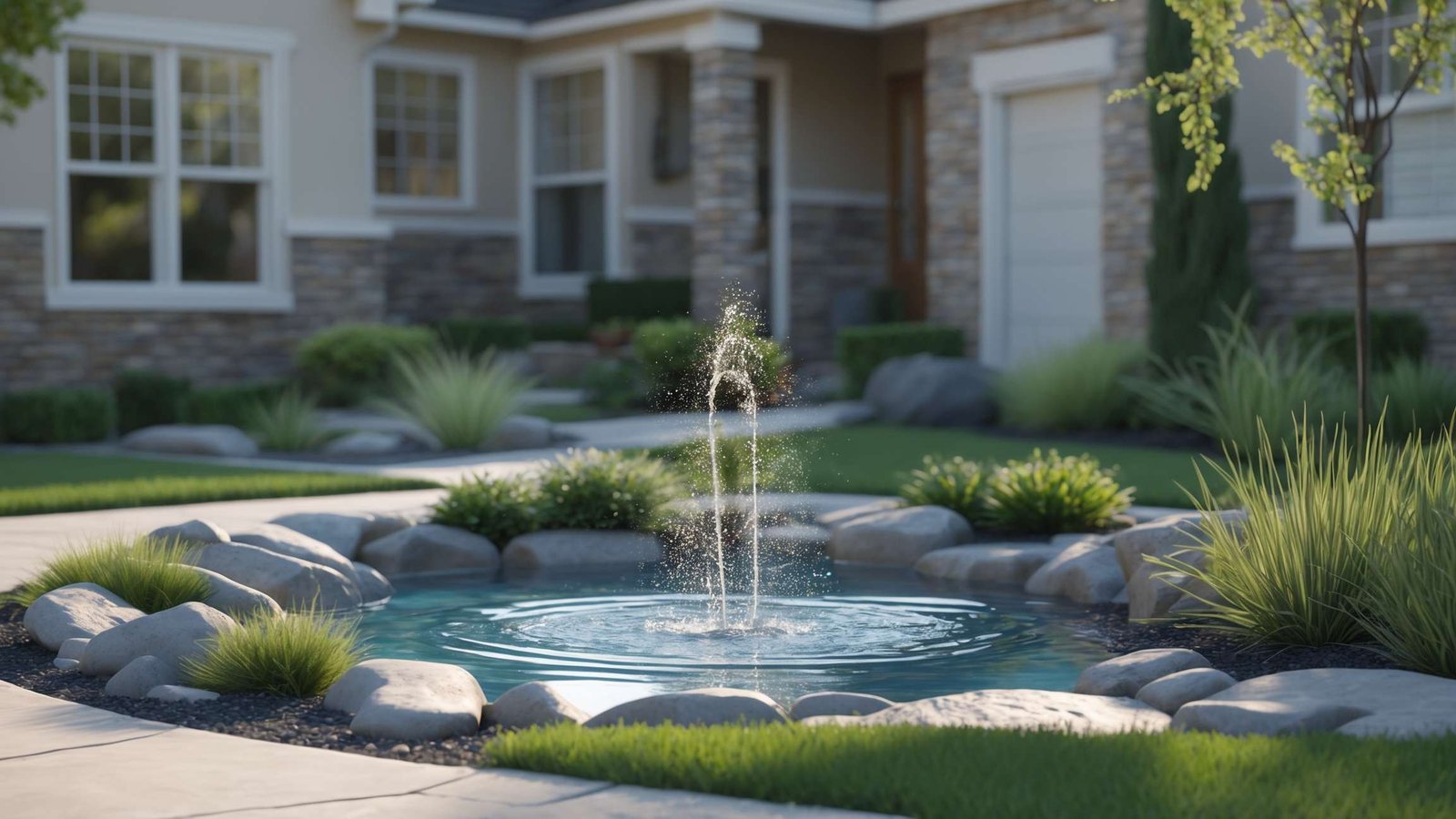
For a more naturalistic approach that suits mountain and rustic home styles, bubbling rock features offer simplicity and low maintenance. Water emerges from a drilled boulder or stacked rock formation, then recirculates through a hidden basin.
These features scale to any budget and space. A single 2-foot boulder with a simple bubbler costs $800 to $1,500 installed. Larger installations with multiple boulders and surrounding plantings can reach $3,000 to $5,000 depending on rock selection and complexity.
Bubbling rocks pair exceptionally well with xeriscape and drought-tolerant landscaping common throughout Santaquin. Surround the feature with ornamental grasses, sage, and native perennials for a cohesive look that requires minimal water beyond the feature itself.
This style also offers the easiest DIY installation if you’re comfortable with basic plumbing. The components are straightforward, and the forgiving design hides small imperfections that would be obvious in a formal fountain.
Stream and Creek Installations
Properties with natural slopes or tiered front yards can take advantage of stream-style water features that follow the grade. These create the appearance of a natural creek bed with water flowing from an upper source down to a lower catch basin.
Stream installations require more planning and excavation than contained fountain systems. You’ll need to work with the existing grade or create berms to establish the water path. Properly installed stream beds include underlayment and liner to prevent water loss, plus carefully placed stone to control flow speed and direction.
The payoff is a water feature that looks completely natural and integrates seamlessly with the rest of your landscaping. Streams work beautifully as borders between different yard zones or as transitions from higher planting areas down to lawn level.
For Santaquin properties, stream features typically run 10 to 20 feet in length with a width of 2 to 4 feet. This provides enough visual presence without requiring excessive water volume. Installation costs range from $5,000 to $12,000 depending on length, stone selection, and site preparation needs.
When planning any major landscape project, consider how water features integrate with other upgrades. Many homeowners in the area combine these installations with full yard transformations that address irrigation, plantings, and hardscaping at the same time.
Water Feature Placement and Integration
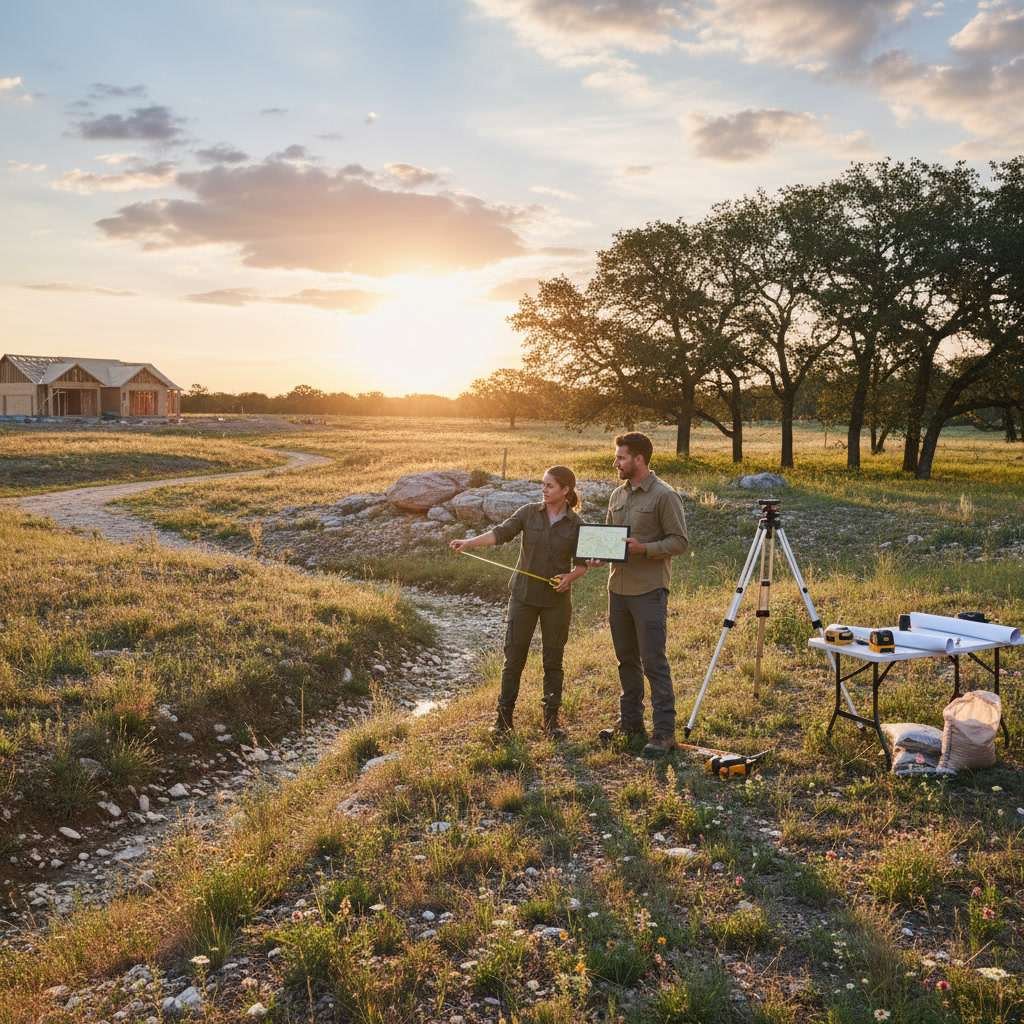
Even the most beautiful water feature fails if placed incorrectly. The location determines how visible it is from the street, how well it integrates with existing landscaping, and whether it enhances or disrupts traffic flow through your front yard.
The most effective placements create a clear focal point visible from the street but positioned to draw visitors toward your entrance. Common locations include the intersection of walkways, centered in planting beds that flank the main path, or offset to one side of the driveway entrance.
Visibility and Sightlines
Stand at the curb and identify where your eye naturally goes when looking at your home. That’s often the best spot for a water feature. Avoid placing features directly in front of windows where they block views from inside, or in corners where large shrubs or trees will eventually hide them.
Account for winter appearance as well. Deciduous trees and perennials that provide summer screening disappear in cold months, potentially exposing features you thought were partially hidden.
Coordinating With Existing Landscaping
Water features should anchor planting schemes, not compete with them. Use the feature as the centerpiece and arrange plants in supporting roles around it. Taller plantings behind the feature add depth, while lower groundcovers and accent plants in front soften edges.
Lighting extends the visual impact into evening hours. Low-voltage LED uplights positioned to highlight the water create dramatic effects after dark and improve safety along walkways. Budget an additional $500 to $1,000 for professional landscape lighting integrated with your water feature.
If you’re concerned about coordinating multiple systems, working with professionals who handle water features and irrigation together simplifies the process. This ensures electrical, water supply, and drainage all work as an integrated system rather than separate installations that might conflict.
Irrigation and Water Supply Considerations
Every water feature needs a reliable water source for initial filling and ongoing evaporation replacement. In Santaquin’s dry climate, you’ll lose roughly one to two inches of water per week during summer months depending on feature size and sun exposure.
The simplest approach connects a dedicated fill line to your existing irrigation system. This allows automatic top-offs on a timer or lets you manually add water as needed without running hoses across the yard. A licensed contractor should handle this connection to ensure proper backflow prevention as required by local code.
If your property already has irrigation issues, address those before adding water features. Problems like poor coverage, broken lines, or inefficient watering schedules only get worse when you add another water-dependent element to the landscape. You might benefit from reviewing common irrigation layout mistakes that waste water in local yards.
Winterization Requirements
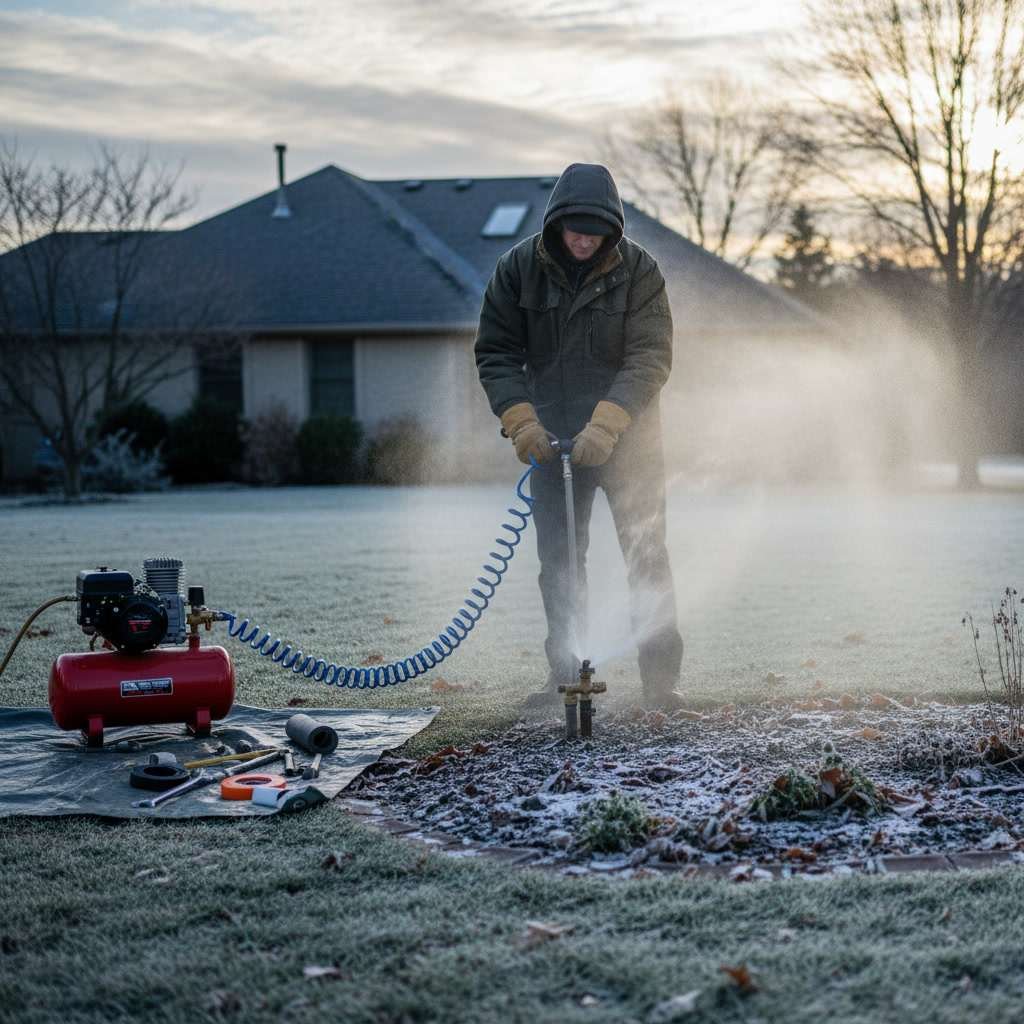
All water features in Santaquin must be winterized before hard freezes arrive, typically by late October. The process involves draining the reservoir, removing and storing the pump, and covering exposed components.
Pondless systems and bubbling rocks winterize easily since the reservoir sits below ground where it’s protected from freezing. Above-ground fountain basins require more care. Drain them completely and cover with weatherproof tarps or custom covers to prevent ice damage.
Professional winterization costs $150 to $300 depending on system complexity. Many homeowners include this service as part of annual lawn maintenance contracts that also cover irrigation blow-outs and seasonal planting care.
Budgeting for Water Feature Installation
Installation costs vary widely based on feature type, size, materials, and site conditions. Understanding the full budget picture helps you choose the right option for your property and avoid surprises.
Basic bubbling rock features start around $800 to $1,500 for simple installations. Mid-range pondless waterfalls and quality tiered fountains typically run $3,000 to $6,000. Custom water walls, large stream systems, and complex integrated designs can reach $8,000 to $15,000 or more.
These ranges include equipment, materials, labor, and basic electrical work. They assume normal soil conditions and reasonable access. Rocky soil requiring excavation equipment, difficult access limiting where materials can be delivered, or extensive electrical runs add to base costs.
Ongoing Maintenance Expenses
Budget $200 to $400 annually for maintenance including spring startup, summer cleaning, and fall winterization. DIY maintenance reduces this to the cost of replacement parts and cleaning supplies, typically under $100 per year.
Pump replacements eventually become necessary. Quality pumps last five to ten years depending on usage. Replacement costs range from $150 for basic fountain pumps to $400 or more for larger waterfall systems.
Water costs remain minimal. Even with regular evaporation replacement, most residential features add less than $10 to monthly water bills during active months.
Choosing the Right Professional for Installation
Water feature installation requires skills across multiple trades including landscaping, plumbing, electrical work, and sometimes concrete or masonry. The best results come from contractors experienced in all these areas rather than specialists in just one.
Look for licensed contractors who can show examples of similar installations in Utah County. Photos aren’t enough. Ask for addresses of completed projects so you can see how features have held up over time and how well they integrate with mature landscaping.
Verify that electrical work will be completed by licensed electricians and that all plumbing meets local code requirements. Santaquin falls under Utah County building jurisdiction, which requires permits for permanent electrical installations and certain plumbing connections.
TG Landscaping brings over 15 years of experience to water feature installations throughout Santaquin and surrounding communities. Our background in concrete work ensures proper foundation and basin construction, while our landscaping expertise creates integrated designs that enhance entire front yards rather than just adding isolated features.
Many water feature projects connect to broader landscape goals. If you’re planning additional work, understanding typical costs helps with overall budgeting. For reference, full backyard remodels in the area often include water features as part of comprehensive transformations.
Frequently Asked Questions
How much water do front yard water features use in Santaquin?
Most residential water features use 50 to 150 gallons for initial filling, then require only one to three gallons per week to replace evaporation during summer months. This is comparable to watering a few extra shrubs and has minimal impact on overall water bills. Recirculating systems don’t consume water, they only replace what’s lost to evaporation.
Can water features stay running during Santaquin winters?
No, all water features should be winterized before temperatures consistently drop below freezing, usually by late October in Santaquin. Frozen water expands and can crack basins, damage pumps, and break plumbing lines. Proper winterization involves draining the system, removing pumps for indoor storage, and protecting exposed components from ice damage.
Do water features attract mosquitoes in Utah County?
Moving water features don’t attract mosquitoes because mosquitoes only breed in standing, stagnant water. Fountains, waterfalls, and streams with constant circulation prevent mosquito breeding. Pondless designs completely eliminate standing water, making them the best choice if mosquitoes are a concern in your neighborhood.
What permits are needed for water feature installation in Santaquin?
Permits depend on the scope of work. Simple plug-in fountains typically don’t require permits. Permanent electrical installations need electrical permits through Utah County. Large water features involving significant excavation or structural elements may require building permits. Your contractor should handle all permit applications as part of the installation process.
How long does professional water feature installation take?
Simple fountain installations take one to two days including site prep, electrical work, and setup. Pondless waterfalls and stream features typically require three to five days depending on size and complexity. Custom water walls and integrated designs with extensive stonework can take one to two weeks. Weather delays and material delivery can extend these timelines.
Next Steps for Your Santaquin Water Feature Project
The best water feature ideas Santaquin homeowners implement share common traits. They match the home’s architectural style, scale appropriately to the available space, and integrate seamlessly with existing landscaping. They’re designed for Utah’s climate, built to handle temperature extremes, and maintained properly through seasonal transitions.
Whether you’re drawn to the natural look of a pondless waterfall, the formal elegance of a tiered fountain, or the modern simplicity of a bubbling rock, the right design can transform your front yard from ordinary to exceptional.
TG Landscaping designs and installs water features throughout Santaquin and nearby communities including Payson, Spanish Fork, and Salem. Our team handles every aspect of the project from initial design through final planting, ensuring your water feature enhances your property for years to come. Contact us at +13856265019 to discuss your front yard vision and schedule a site consultation.