Water is precious in Utah, yet many Santaquin homeowners unknowingly waste hundreds or thousands of gallons each month because of poor sprinkler design. A badly planned irrigation layout Santaquin residents install or inherit can turn a beautiful yard into a money pit, flooding some areas while leaving others bone dry. The good news is that most of these mistakes are fixable with the right knowledge and a bit of planning.
This guide walks through the most common irrigation design errors we see in Santaquin properties, explains why they cause problems, and shows you how to avoid or correct them. Whether you’re planning a new system or troubleshooting an existing one, understanding these mistakes will save you water, money, and frustration.
Poor Sprinkler Head Placement and Spacing
The single biggest mistake in irrigation layout Santaquin homeowners make is improper sprinkler head placement. When heads are too far apart, you get dry spots. When they’re too close, you waste water through excessive overlap. Most spray heads should be spaced no more than 15 feet apart, and rotors work best at 25 to 35 feet depending on water pressure.
Another issue is placing heads in corners without adjusting the spray pattern. A full-circle head in a corner wastes 75% of its water on pavement, fences, or your neighbor’s yard. Always use adjustable nozzles or quarter-circle heads in corners and half-circle heads along edges.
Shrubs and plants also interfere with spray patterns over time. What worked when the system was first installed may now be blocked by a hedge that grew three feet taller. Regular audits of your irrigation layout and design prevent these coverage gaps from wasting water while parts of your lawn turn brown.
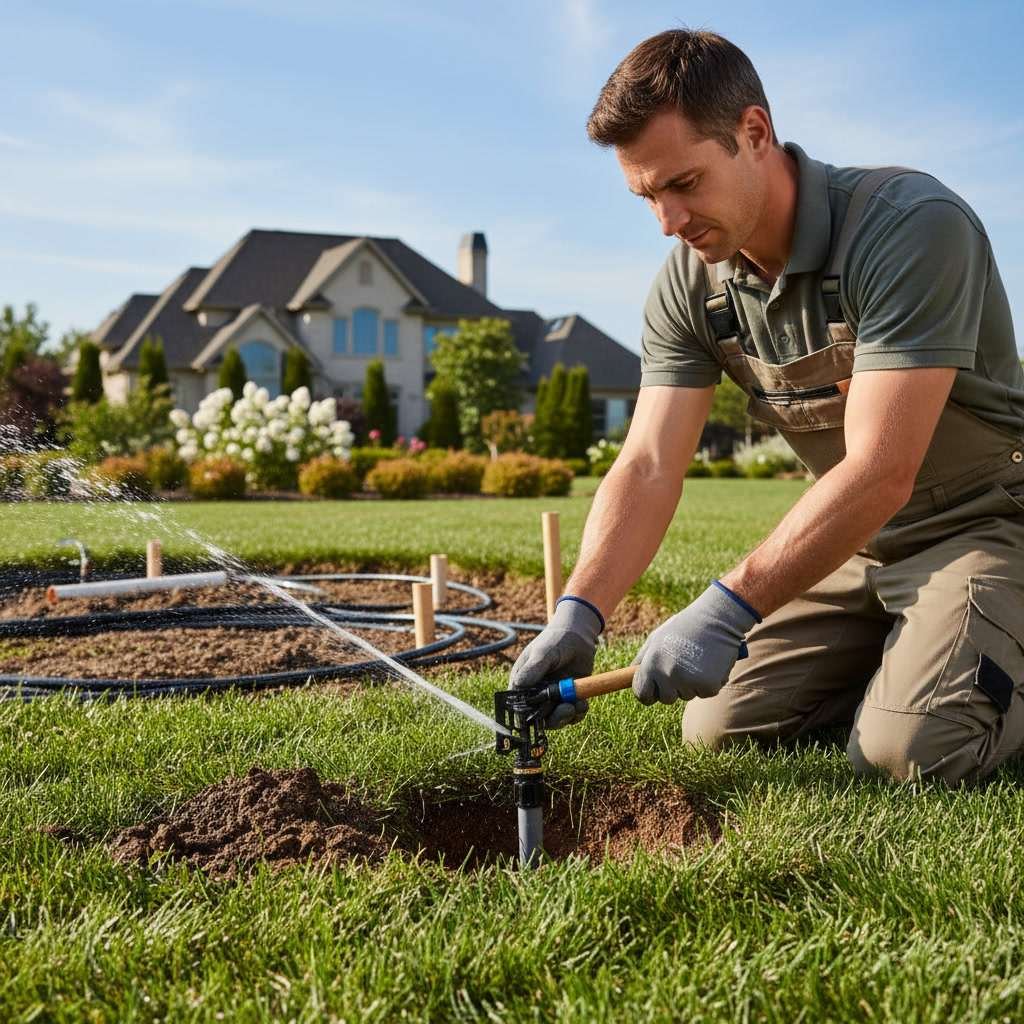
Pro Tip: Walk your yard while the system is running at least twice per season. Look for misting, blocked spray patterns, and areas that stay dry. These visual checks catch problems before they damage your lawn.
Mixing Sprinkler Types on the Same Zone
Combining different types of sprinkler heads on a single zone is a recipe for uneven watering. Spray heads typically put out 1.5 inches of water per hour, while rotors deliver closer to 0.5 inches per hour. When you run them on the same zone, you either underwater the rotor areas or flood the spray head areas.
Drip irrigation, spray heads, and rotors each require different run times and pressures. Grouping them together means you can’t properly calibrate water delivery. The result is always waste, either through runoff in over-watered sections or through the need to run the system longer to reach dry spots.
The fix requires rezoning your system so similar heads run together. This might mean adding a valve or two, but the water savings and lawn health improvements pay for the upgrade quickly. If you’re planning a full yard transformation, make sure your irrigation zones are designed properly from the start.
Ignoring Slope and Drainage Patterns
Santaquin properties often have sloped yards, especially on the east bench areas. Ignoring slope when designing an irrigation layout Santaquin contractors see all the time leads to massive water waste through runoff. Water applied faster than soil can absorb it simply runs downhill, flooding low spots and leaving upper areas dry.
On slopes greater than 10 degrees, you need to reduce application rates and use cycle-and-soak programming. This means running zones for 10 to 15 minutes, letting water soak in for 30 minutes, then running again. It takes longer but prevents runoff and actually gets water to the root zone.
Low spots also need special attention. These areas naturally collect water, so they need less irrigation time. Placing the same sprinkler schedule on low and high areas guarantees you’ll either starve the high ground or drown the low spots. Proper zone design accounts for these elevation changes.
Addressing Hardscape Runoff
Driveways, patios, and sidewalks create their own drainage issues. Sprinklers positioned too close to hardscape often overspray, sending water straight down the driveway and into the street. This is not only wasteful but can also create liability issues if it causes icing in winter or slick conditions.
Position heads at least 6 inches away from hardscape edges and adjust nozzles to eliminate overspray. If you’re installing new concrete or pavers, coordinate with your irrigation contractor before pouring. Projects involving both elements, like those detailed in our post on backyard remodel costs, should always plan irrigation around final hardscape layouts.
Inadequate Valve and Zone Planning
Putting too much area on a single zone is another common mistake. Residential water lines and valves can only handle a certain flow rate, typically 5 to 12 gallons per minute depending on your home’s supply. If you try to run 15 sprinkler heads that each need 2 GPM on one zone, you’ll starve the system and get weak, ineffective coverage.
Undersized valves create low pressure throughout the system. Heads designed to spray 15 feet might only reach 10 feet when pressure drops, leaving dead zones between heads. You end up running the system longer to compensate, wasting water and still not getting full coverage.
Proper zone planning divides your yard based on both water needs and flow capacity. Sun-exposed turf goes on different zones than shaded areas. Trees and shrubs get their own drip zones. And each zone respects the GPM limits of your supply line and valve.
Valve Placement Matters Too
Hiding valves in inaccessible locations makes maintenance nearly impossible. We’ve seen valve boxes buried under decks, trapped behind established shrubs, and placed in areas that flood every time it rains. When a valve needs repair, you should be able to reach it without excavating half your yard.
Place valve boxes in accessible locations at least 12 inches away from structures and pathways. Mark them clearly and keep vegetation trimmed back. Your sprinkler repair and maintenance team will thank you, and you’ll save money on service calls.
Wrong Controller Programming
Even a perfectly designed irrigation layout Santaquin property owners install can waste water if the controller is programmed incorrectly. The most common mistake is using the same run time for all zones. As discussed earlier, different sprinkler types and different sun exposures need different amounts of water.
Many homeowners also fail to adjust schedules seasonally. Your lawn needs far more water in July than in April or September, yet many systems run the same schedule year-round. This either kills the lawn in summer or drowns it in spring, and always wastes water.
Smart controllers that adjust for weather and soil moisture take the guesswork out of scheduling. They can cut water use by 20 to 40% compared to basic timers. If you’re still using a controller from the 1990s, upgrading pays for itself in one or two seasons.
Key Takeaway: Set different run times for each zone based on sun exposure, sprinkler type, and soil conditions. Adjust your schedule at least four times per year, or upgrade to a smart controller that does it automatically.
Failure to Match Precipitation Rates
Precipitation rate, measured in inches per hour, tells you how fast your sprinklers apply water. When different zones have wildly different precipitation rates, you can’t program a sensible watering schedule. One zone might need 20 minutes while another needs 45 minutes to deliver the same amount of water.
Matching precipitation rates across zones makes programming easier and prevents waste. You achieve this by selecting compatible nozzles and heads for each zone and by properly spacing heads for even coverage. It’s a technical detail that many DIY installations miss but professional residential landscaping companies account for in their designs.
You can measure precipitation rate yourself with catch cups. Place six to eight identical containers around a zone, run the system for 15 minutes, and measure the water in each cup. Divide the average depth by the run time and multiply by four to get inches per hour. If you see huge variations between cups, you have a coverage or spacing problem.
Neglecting System Maintenance
Even a well-designed system degrades over time without maintenance. Clogged nozzles reduce coverage. Leaking valves waste water 24 hours a day. Broken pipes create geysers that flood your yard and spike your water bill. These problems don’t fix themselves, and ignoring them turns minor issues into expensive failures.
Spring startups and fall winterizations are not optional in Utah’s climate. Failing to properly blow out your lines before winter can cause pipe bursts that require digging up sections of your yard to repair. A $100 winterization service saves you from $1,000-plus in spring repairs.
During the season, check your system monthly. Look for unusually wet or dry spots, listen for hissing from leaking valves, and watch your water bill for unexpected spikes. Catching problems early saves water and money. Regular lawn maintenance visits often include basic irrigation checks that spot these issues before they escalate.
Head Height and Adjustment
Sunken or tilted sprinkler heads are more than cosmetic problems. A head that sits two inches below grade can’t spray properly and often gets clogged with dirt and grass clippings. Raised heads are mowing hazards and spray in the wrong direction.
Adjustable heads lose their settings over time from vibration, mower strikes, and foot traffic. A head set to 90 degrees might slowly creep to 120 degrees, spraying your house siding or driveway instead of your lawn. Check and readjust heads at least twice per season.
Overwatering and Runoff From Excessive Run Times
Many Santaquin homeowners water too much, not too little. Clay-heavy soils common in the area absorb water slowly. If you apply water faster than soil can absorb it, you get runoff regardless of how well your system is designed. This washes away topsoil, creates muddy messes, and delivers zero benefit to your lawn.
Most turf needs about one inch of water per week during peak summer, including rainfall. That translates to three or four watering cycles of 15 to 20 minutes each for spray heads, or 45 to 60 minutes for rotors. More than that either runs off or saturates soil to the point where roots rot.
The best approach is to water deeply but infrequently. This encourages deep root growth and creates drought-resistant turf. Shallow, frequent watering creates weak, shallow roots that need constant moisture. If your current schedule has you watering every day, you’re doing it wrong and wasting water in the process.
Frequently Asked Questions
How far apart should sprinkler heads be spaced in Santaquin yards?
Spray heads should be spaced no more than 15 feet apart, and rotors work best at 25 to 35 feet depending on water pressure and wind conditions. Proper spacing ensures head-to-head coverage without excessive overlap or dry spots. Santaquin’s occasional afternoon winds require slightly tighter spacing than calm climates.
Can I mix spray heads and rotors on the same irrigation zone?
No, you should never mix spray heads and rotors on the same zone because they have different precipitation rates and require different run times. Spray heads deliver water about three times faster than rotors. Mixing them means you’ll either underwater the rotor areas or flood the spray head areas, wasting water and harming your lawn.
How often should I adjust my sprinkler schedule throughout the year?
You should adjust your irrigation schedule at least four times per year to match seasonal water needs: once in spring, once for peak summer heat, once in early fall, and once before winterization. Smart controllers can make these adjustments automatically based on local weather data, saving water and improving lawn health without manual changes.
What causes some areas of my yard to flood while others stay dry?
Uneven watering usually results from poor sprinkler spacing, mixing different head types on one zone, or failing to account for slopes and drainage patterns. Overapplication in low spots causes flooding while high spots stay dry. The solution requires rezoning your system and adjusting run times based on elevation and sun exposure.
How much water can a poorly designed irrigation system waste?
A badly designed system can waste 30 to 50% of applied water through runoff, overspray, and evaporation. For a typical Santaquin home using 15,000 gallons per month for irrigation during summer, that’s 4,500 to 7,500 gallons wasted monthly, or enough to fill a small swimming pool every season. Proper design and maintenance cuts waste dramatically and lowers water bills.
Getting Your Irrigation System Right
Poor irrigation design costs Santaquin homeowners thousands of dollars in wasted water, higher utility bills, and lawn damage. The mistakes covered here, from improper head spacing to ignoring slopes and mixing sprinkler types, are common but fixable. Whether you need a complete system redesign or targeted repairs, addressing these issues improves water efficiency and lawn health while lowering your monthly costs.
TG Landscaping has spent over 15 years designing and installing efficient irrigation systems for properties throughout Santaquin and surrounding areas. Our irrigation layout Santaquin homeowners depend on accounts for local soil conditions, typical wind patterns, and water pressure variations unique to Utah County. If your current system is wasting water or leaving your lawn in poor condition, we can audit your setup and recommend practical solutions.
Call us at +13856265019 to schedule an irrigation system evaluation. We’ll walk your property, identify problem areas, and provide honest recommendations for repairs or upgrades that match your budget and goals.