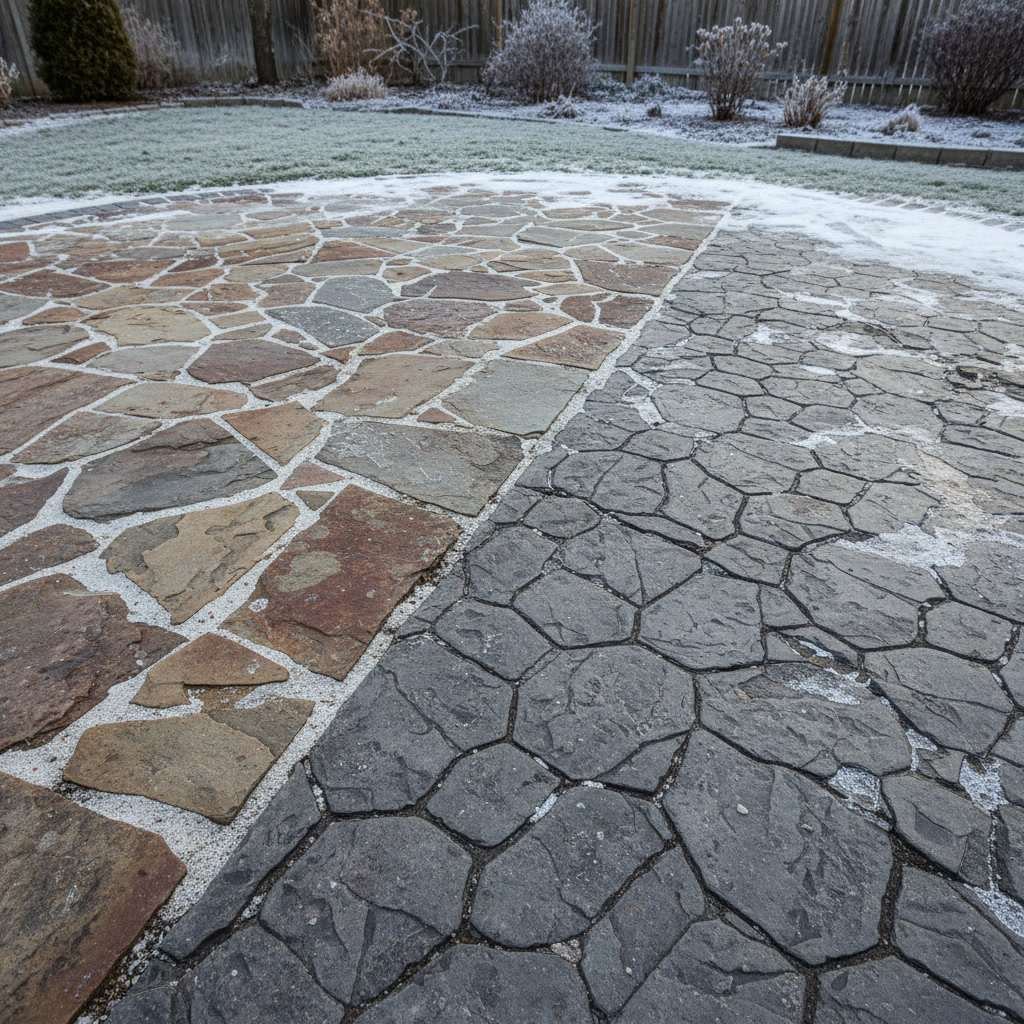
Natural stone pavers generally outlast stamped concrete in freeze-thaw conditions because individual units can shift and settle without cracking, while monolithic concrete slabs are more vulnerable to thermal expansion stress. The key difference lies in how each material handles moisture absorption and temperature fluctuation. While both materials can perform well when properly installed, pavers offer inherent flexibility that helps them survive repeated winter cycles with less visible damage over time.
Understanding how your patio will hold up through years of seasonal temperature swings helps you make a smarter investment. Both options have their place in landscape design, but the answer depends on your soil conditions, drainage, installation quality, and maintenance commitment.
Why Freeze-Thaw Cycles Damage Hardscape Materials
Water is the main enemy of any outdoor surface. When moisture seeps into porous materials and freezes, it expands by roughly nine percent. This expansion creates internal pressure that can crack, lift, or fracture the surface. When temperatures rise, the ice melts and leaves behind tiny fissures that allow even more water to enter during the next cycle.
In areas like Utah County, where temperatures regularly swing from below freezing at night to above freezing during the day throughout winter and early spring, materials face dozens of freeze-thaw events each season. Over ten to fifteen years, this repetitive stress separates durable installations from those that crack and fail.
The speed at which water drains away from the surface matters just as much as the material itself. Poor drainage amplifies freeze-thaw damage by keeping surfaces saturated longer. Even the most durable stone or concrete will suffer if water pools and freezes repeatedly in the same spot.
How Natural Stone Pavers Respond to Temperature Swings
Natural stone pavers are individual units, typically two to three inches thick, laid in sand or gravel base with joint gaps filled by polymeric sand or fine aggregate. This segmented design allows each paver to move independently when ground shifts or frost heaves occur.
Because pavers are not rigidly bonded together, minor ground movement does not translate into surface cracks. If one paver settles or shifts, you can lift and re-level it without replacing the entire patio. This modularity is a major advantage in climates with active freeze-thaw cycles.
Stone density and porosity vary by type. Dense stones like granite and basalt absorb very little water, making them highly resistant to freeze damage. Softer sedimentary stones like sandstone and limestone are more porous and can suffer surface spalling if water penetrates and freezes inside the stone itself. Choosing the right stone type for your climate is as important as the installation method.
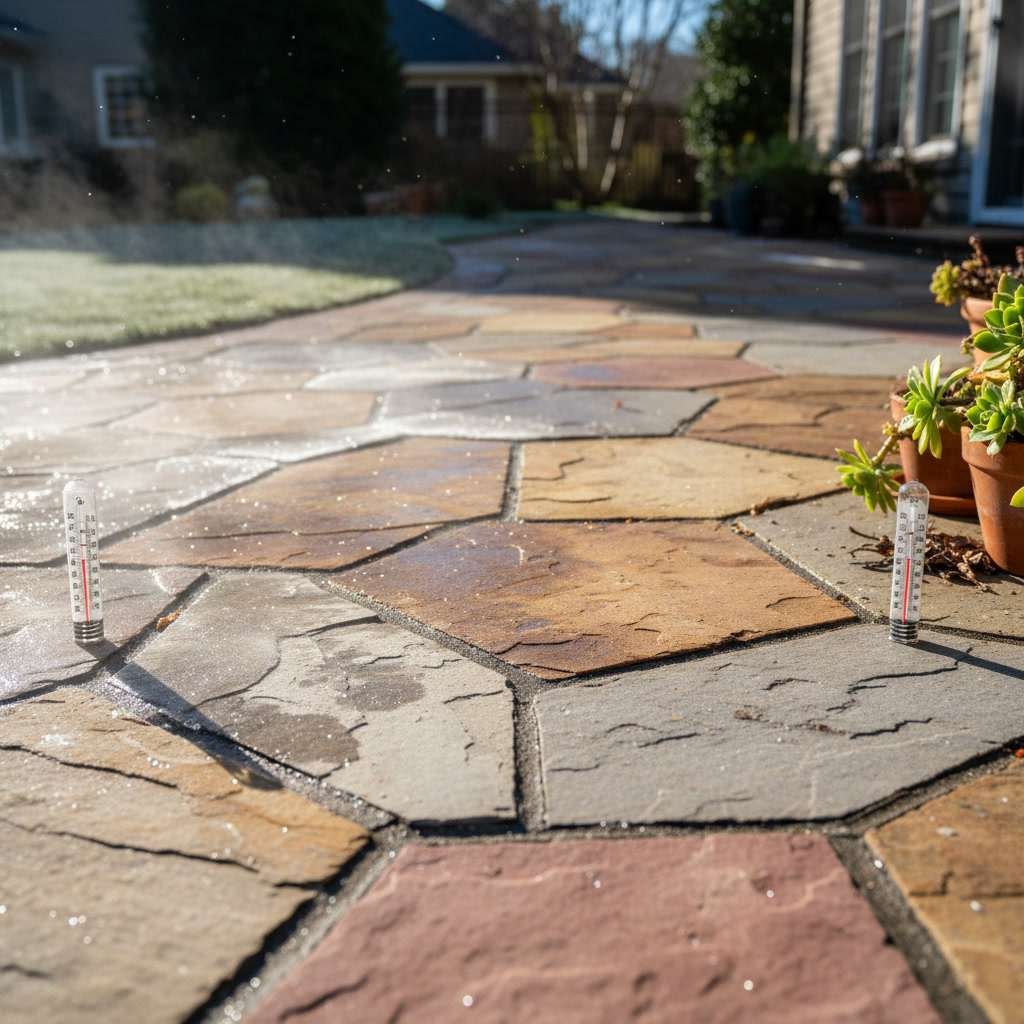
How Stamped Concrete Handles Winter Conditions
Stamped concrete is a continuous slab, typically four to six inches thick, poured over a compacted gravel base and finished with texture patterns and color to mimic stone, brick, or tile. Because it is monolithic, the entire surface moves as one unit when the ground shifts.
Concrete is naturally porous. Without proper sealing, it absorbs moisture that can freeze and cause surface flaking, known as spalling, or deeper structural cracks. High-quality mixes with low water-cement ratios, air entrainment additives, and proper curing significantly improve freeze-thaw resistance.
Control joints are intentional lines cut or formed into the concrete to direct where cracks will occur as the slab expands and contracts. Properly spaced control joints reduce random cracking, but they do not eliminate it. Over time, even well-installed stamped concrete will develop hairline cracks, especially if the subgrade was not adequately compacted or if drainage is poor.
Sealer maintenance is critical. Most stamped concrete requires resealing every two to three years to maintain moisture resistance. Neglecting this maintenance accelerates freeze-thaw damage and surface deterioration.
Comparing Longevity in Payson and Surrounding Areas
In central Utah, where winters bring consistent freeze-thaw cycles and occasional heavy snowfall, both materials can last decades if installed correctly. However, real-world performance often favors pavers for one specific reason: repairability.
When stamped concrete cracks, the repair is visible and often requires patching or resurfacing large sections. The new concrete rarely matches the original color or texture perfectly, leaving a patchwork appearance. When a paver cracks or settles, you replace or re-level individual units without affecting the rest of the patio.
Stamped concrete installed by experienced contractors using proper techniques and high-quality materials can last 20 to 30 years with minimal cracking. Pavers, especially dense natural stone, can last 50 years or more and still look nearly new if joints are maintained and occasional re-leveling is performed.
Installation Quality Matters More Than Material Choice
Even the best material will fail if the foundation is weak. Both pavers and stamped concrete require a well-compacted gravel base, proper slope for drainage, and attention to soil conditions.
For pavers, the base should be at least six inches of compacted crushed stone, topped with one to two inches of bedding sand. Edge restraints prevent lateral movement. Joint sand must be compacted and topped off after initial settling.
For stamped concrete, the subgrade must be compacted to prevent settling. The concrete mix should include air entrainment for freeze-thaw resistance, and control joints should be placed every eight to ten feet in both directions. Sealer should be applied after curing and reapplied on schedule.
Shortcuts in either installation process lead to premature failure. A poorly installed paver patio will settle unevenly and develop low spots that hold water. A poorly poured concrete slab will crack within the first winter. This is why choosing a contractor with deep experience in local soil and climate conditions is essential for any full yard transformation.
Maintenance Requirements Over Time
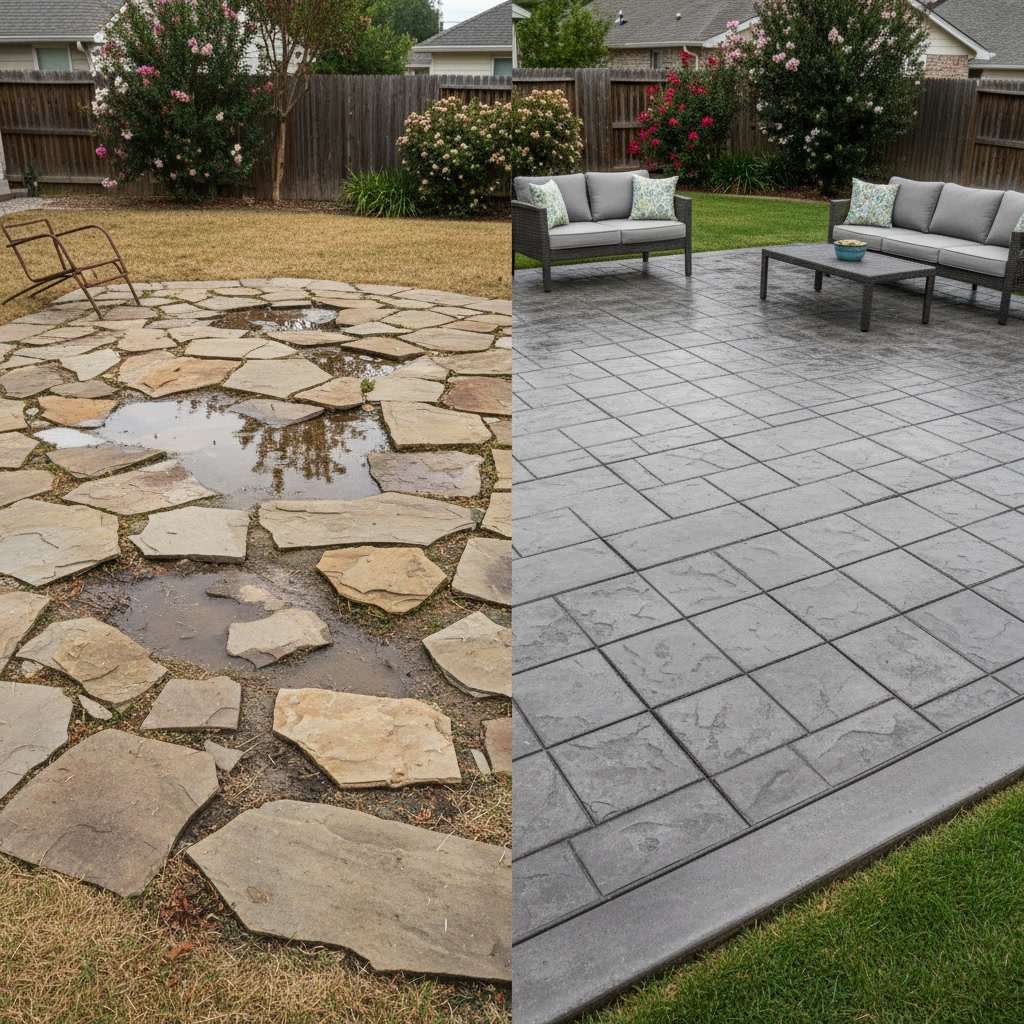
Pavers need periodic joint sand replenishment, weed control between units, and occasional re-leveling if settling occurs. Power washing can remove surface stains and moss. Sealing pavers is optional but can enhance color and reduce staining.
Stamped concrete requires regular sealing to protect against moisture and surface wear. Cracks should be filled promptly to prevent water infiltration. De-icing salts can damage the surface and should be avoided or used sparingly.
Both materials benefit from proper drainage. Ensuring water flows away from the patio reduces freeze-thaw stress and extends lifespan. Installing or upgrading drainage as part of your project planning is a wise investment, especially if your property has clay soil or poor natural drainage.
Cost and Value Considerations
Stamped concrete typically costs less upfront than natural stone pavers. Installation is faster, and labor is less intensive. For budget-conscious homeowners, this makes stamped concrete an attractive option.
Natural stone pavers cost more initially due to material expense and labor-intensive installation. However, their longer lifespan, easier repair, and higher resale appeal can offset the upfront premium over time.
When evaluating cost, consider the total lifetime expense, including maintenance, repairs, and potential replacement. A stamped concrete patio that cracks and needs resurfacing after 15 years may end up costing more than pavers that last 40 years with minimal intervention. For homeowners planning long-term investment in their outdoor spaces, projects like a complete backyard remodel often justify the higher upfront cost of pavers.
Which Material Performs Better in Wet or Shaded Areas
Patios in shaded areas or low-lying spots where water tends to collect face more severe freeze-thaw stress. Pavers handle these conditions better because water drains through the joints rather than pooling on the surface.
Stamped concrete in persistently wet areas is more prone to spalling and cracking. If your patio location stays damp or receives limited sunlight, pavers are the safer choice.
If you are committed to stamped concrete in a challenging location, invest heavily in drainage solutions. French drains, grading adjustments, and proper slope can mitigate moisture issues, but the effort and cost may negate the initial savings over pavers.
Expert Insight on Base Preparation and Frost Depth
One factor many contractors overlook is the relationship between base depth and local frost line. In Utah County, the frost line reaches 30 to 36 inches deep. While you do not need to excavate to that depth, understanding frost heave mechanics is critical.
Clay soils retain moisture and expand significantly when frozen. If your patio base sits on uncompacted clay, frost heave will lift the surface unevenly, causing pavers to shift or concrete to crack. The solution is to excavate below the topsoil layer, remove expansive clay where possible, and replace it with well-draining crushed stone.
A properly compacted aggregate base acts as a capillary break, preventing moisture from wicking up from below and reducing frost heave. This step is non-negotiable for both pavers and stamped concrete. Skipping it to save a few hundred dollars often leads to thousands in repair costs within five years.
Design Flexibility and Aesthetic Longevity
Pavers offer more design flexibility. You can create intricate patterns, mix colors and textures, and even replace individual pavers later if you want to change the look. Natural stone develops a patina over time that many homeowners find appealing.
Stamped concrete provides a uniform, seamless appearance that works well for modern or minimalist designs. However, color fades over time due to UV exposure and wear, requiring periodic re-staining or re-sealing to maintain the original look.
If your design includes curves, borders, or integration with other landscape features like water features, pavers adapt more easily. Stamped concrete can accommodate curves, but forming and finishing curved edges is more labor-intensive and increases cost.
Making the Right Choice for Your Home
Your decision should weigh upfront cost, long-term durability, maintenance willingness, and site-specific conditions. If your property has stable soil, good drainage, and you are committed to regular sealing, stamped concrete can perform well and save money initially.
If you want maximum longevity, easier repairs, and better performance in challenging conditions, natural stone pavers are the superior choice. They handle freeze-thaw cycles more gracefully, last longer, and maintain their appearance with less intervention.
Both materials have earned their place in quality landscape design. The key is matching the material to your site, budget, and long-term goals. Working with a contractor who understands local soil, climate, and proper installation techniques ensures your investment performs as expected for decades.
For homeowners in Payson and surrounding communities, choosing between these materials is not just about aesthetics. It is about building outdoor spaces that withstand the unique demands of Utah’s climate and continue to add value and enjoyment year after year. TG Landscaping brings over 15 years of hands-on experience with both pavers and stamped concrete, along with deep knowledge of local soil conditions and freeze-thaw performance. Whether you are planning a simple patio or a complete residential landscaping project, our team can help you select the right material and execute an installation built to last. Reach out at +13856265019 to discuss your project and get a detailed assessment of which option will serve your home best for the long haul.