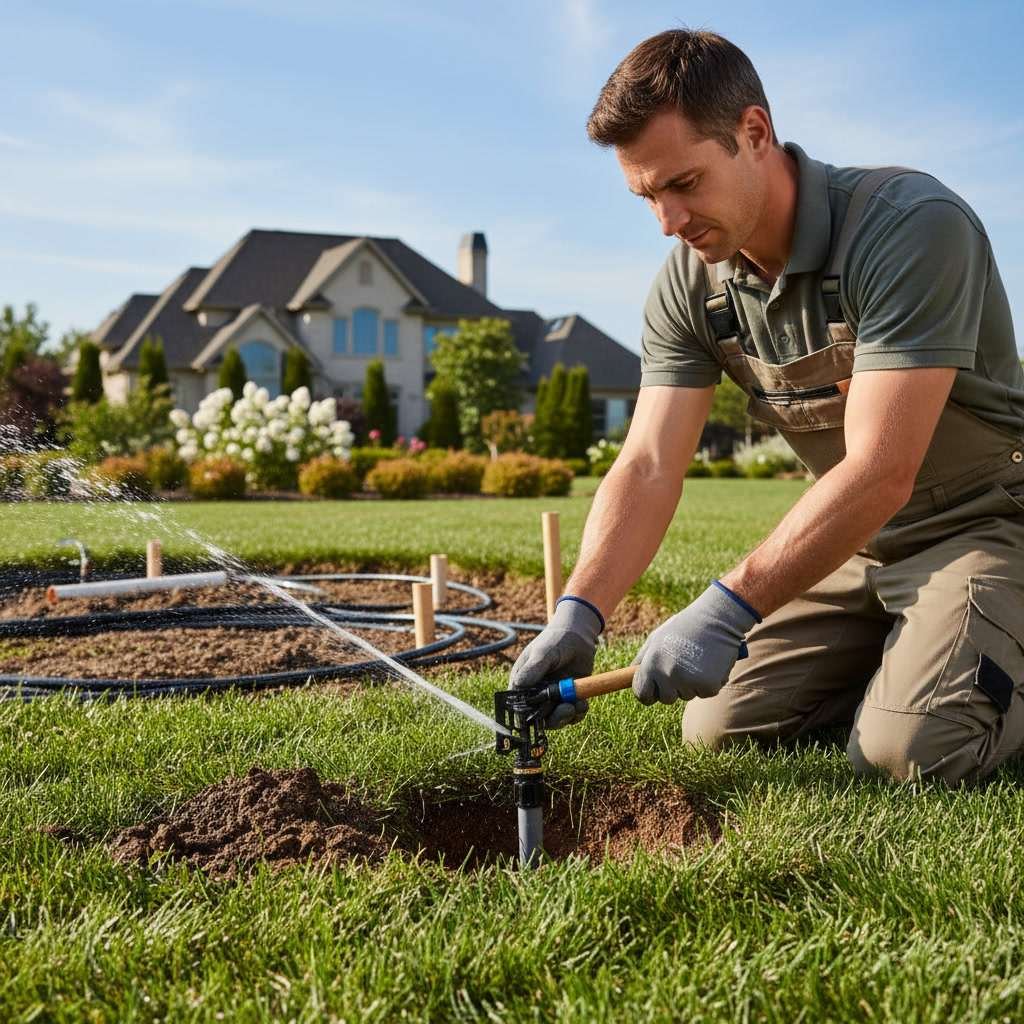
Regular professional sprinkler system maintenance catches small issues before they become expensive mid-season failures, reduces water waste by up to 30%, and ensures every zone delivers the right amount of water exactly where your landscape needs it. Scheduled inspections identify worn valves, clogged nozzles, and pressure inconsistencies that lead to dry patches, flooded areas, and utility bills that double without warning.
Why Irrigation Systems Fail During Peak Growing Season
Most sprinkler breakdowns happen in July and August when systems run longest and hardest. Components that survived winter and spring finally give out under daily stress. Valves that operated fine at 15 minutes per cycle start leaking when programmed for 25 minutes. Nozzles that delivered adequate coverage in cooler weather can’t keep up when evaporation rates triple.
The timing creates a perfect storm. Your lawn needs maximum water during the hottest weeks, but that’s exactly when weak points in the system collapse. A cracked lateral line that dripped slowly in May becomes a geyser in July. A valve diaphragm that showed minor wear in April fails completely when temperatures hit 95 degrees and run times double.
The Hidden Cost of Deferred Sprinkler Care
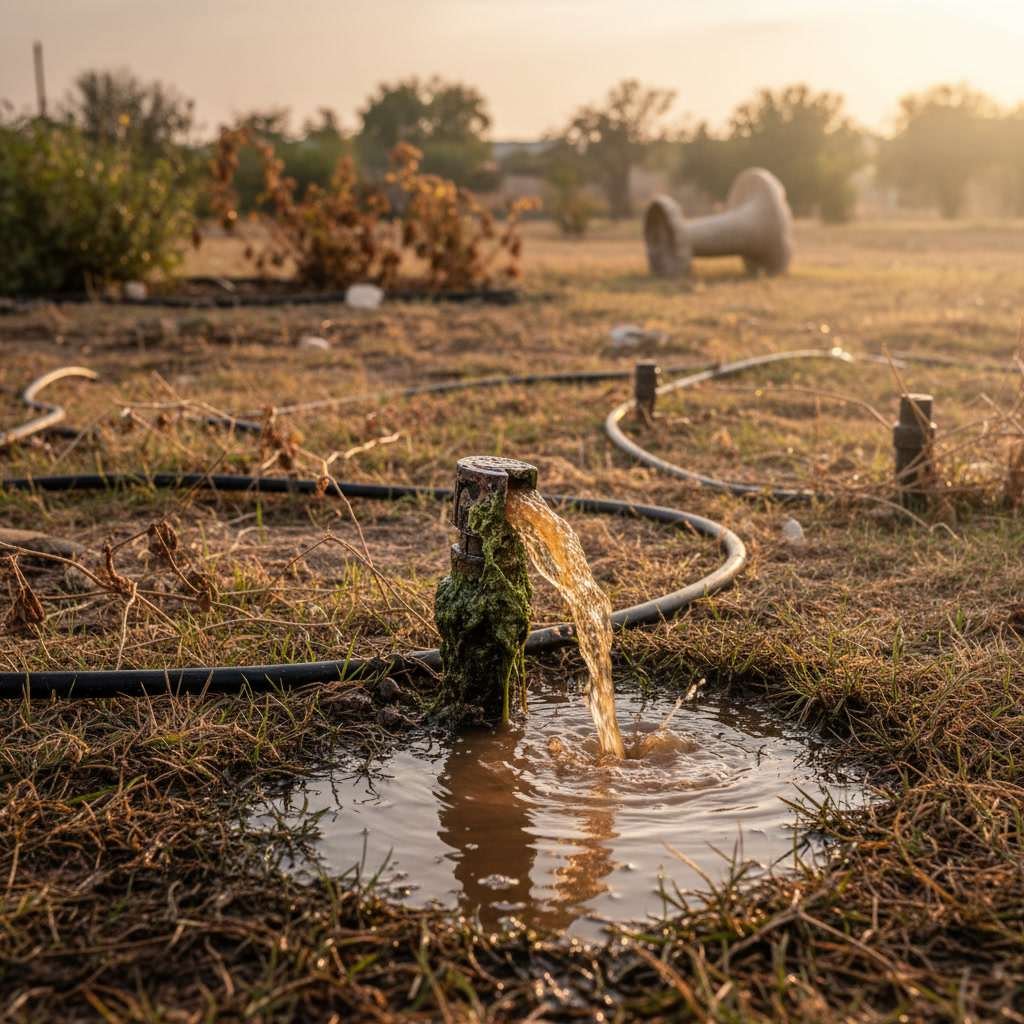
Skipping annual inspections saves $150 today but often costs $1,200 later. A $12 valve diaphragm that goes unnoticed floods a basement. A $3 nozzle screen that stays clogged wastes 400 gallons per week while the turf dies anyway. Small failures cascade into expensive emergencies that require after-hours service calls and expedited parts.
Water waste compounds the financial damage. A single stuck valve running overnight uses 2,000 to 3,000 gallons. A broken spray head misting into the air instead of watering the lawn wastes 40% of the water it delivers. These problems persist for weeks before most property owners notice, turning a minor repair into a major utility bill spike.
Seven Components That Need Annual Inspection
Professional inspections systematically check each part of the system, identifying wear before it causes failure. Here’s what trained technicians evaluate during a complete service visit:
Controller programming and battery backup: Settings drift over time as homeowners adjust schedules without documenting changes. Dead batteries erase programs during power outages. Technicians verify run times match current landscape needs and replace batteries before they fail.
Valve operation and diaphragm condition: Valves cycle thousands of times per season. Diaphragms develop tiny cracks that grow with each use. Solenoids collect mineral deposits that slow response. Inspections catch these issues while valves still function, before they stick open or refuse to activate.
Backflow preventer certification: Annual testing and certification is required by code in most areas. The device prevents contaminated water from flowing back into drinking water supplies. Failure means potential health hazards and code violations.
Spray head alignment and nozzle condition: Heads settle, shift, and get bumped by mowers. Nozzles wear, clog, and develop inconsistent spray patterns. What started as uniform coverage becomes a patchwork of over-watered and under-watered zones.
Pipe integrity and connection points: Freeze-thaw cycles, soil settling, and root intrusion stress pipes and fittings. Hairline cracks seep water all season. Loose fittings drip constantly. Both waste water and reduce pressure to downstream heads.
Pressure regulation and zone balance: Proper pressure keeps heads working as designed. Too much pressure creates misting and wastes water. Too little leaves dry spots. Professional maintenance includes pressure testing and adjustment to optimize every zone.
Rain and soil moisture sensors: These devices save water by preventing unnecessary watering after storms. Corroded connections and calibration drift make them unreliable. Annual service ensures they actually stop the system when they should.
How Seasonal Adjustments Prevent Waste in Payson
Utah’s dramatic seasonal shifts require different watering strategies throughout the year. Spring demands light, frequent watering to support new growth without oversaturating cool soil. Summer requires deep, less frequent watering to build drought tolerance. Fall needs gradual reduction as temperatures drop and evaporation slows.
Most homeowners set their controller in May and forget it until October. The system delivers the same amount of water in 95-degree July heat as it did in 65-degree April afternoons. The result is either chronic under-watering that stresses plants or massive over-watering that wastes thousands of gallons and promotes disease.
Professional services include seasonal programming adjustments based on current weather patterns, plant maturity, and soil conditions. These changes can reduce water consumption by 20 to 30% compared to static programming while actually improving landscape health. The same attention to detail that goes into a full yard transformation applies to keeping that investment healthy year after year.
The Spring Startup Process That Catches Winter Damage
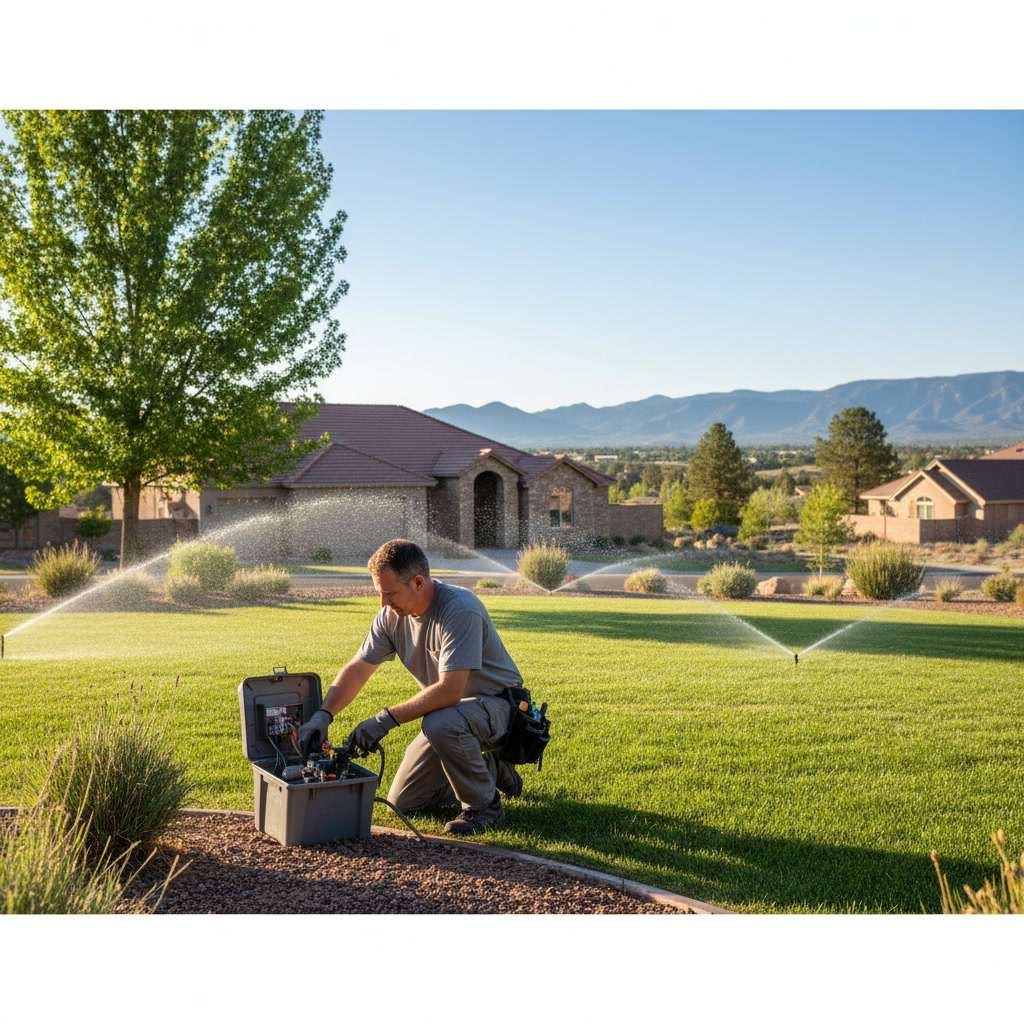
Proper spring activation does more than just turn the system back on. Technicians pressurize the system gradually to avoid damaging pipes that may have shifted or cracked during winter. They run each zone individually while watching for leaks, checking coverage patterns, and noting any heads that need adjustment or replacement.
This systematic approach identifies problems invisible to homeowners doing their own startup. A valve that barely opens still activates, so the zone appears to work, but pressure is low and coverage is inadequate. A cracked fitting drips underground where nobody sees it, wasting water all season. A shifted head sprays the fence instead of the lawn, leaving a dead zone that won’t green up no matter how long the system runs.
The inspection also reveals damage from landscape changes made during the off-season. New mulch buried heads. A revised garden bed now blocks spray coverage. Tree roots invaded a valve box. Catching these issues during startup prevents months of poor performance.
Mid-Season Checks That Stop Small Problems Early
A quick mid-season inspection in late June or early July catches problems that developed since spring startup. Heads that worked fine in May may have settled or been damaged by lawn equipment. Valves operating normally at moderate run times may struggle with peak summer schedules. Pressure changes from neighborhood water system adjustments affect distribution patterns.
This checkpoint also provides an opportunity to adjust watering schedules based on actual weather rather than predictions. If spring was unusually wet, soil moisture levels are higher than normal and watering can be reduced. If May and June were hot and dry, increases may be necessary to maintain plant health.
Many issues found during mid-season checks relate to changes in the landscape itself. Plants grew and now block spray patterns. Turf filled in and requires different coverage. Trees added shade that reduced evaporation in certain zones. Professional technicians adjust the system to match the landscape’s current needs, not what it looked like when the system was installed.
What Proper Winterization Actually Protects
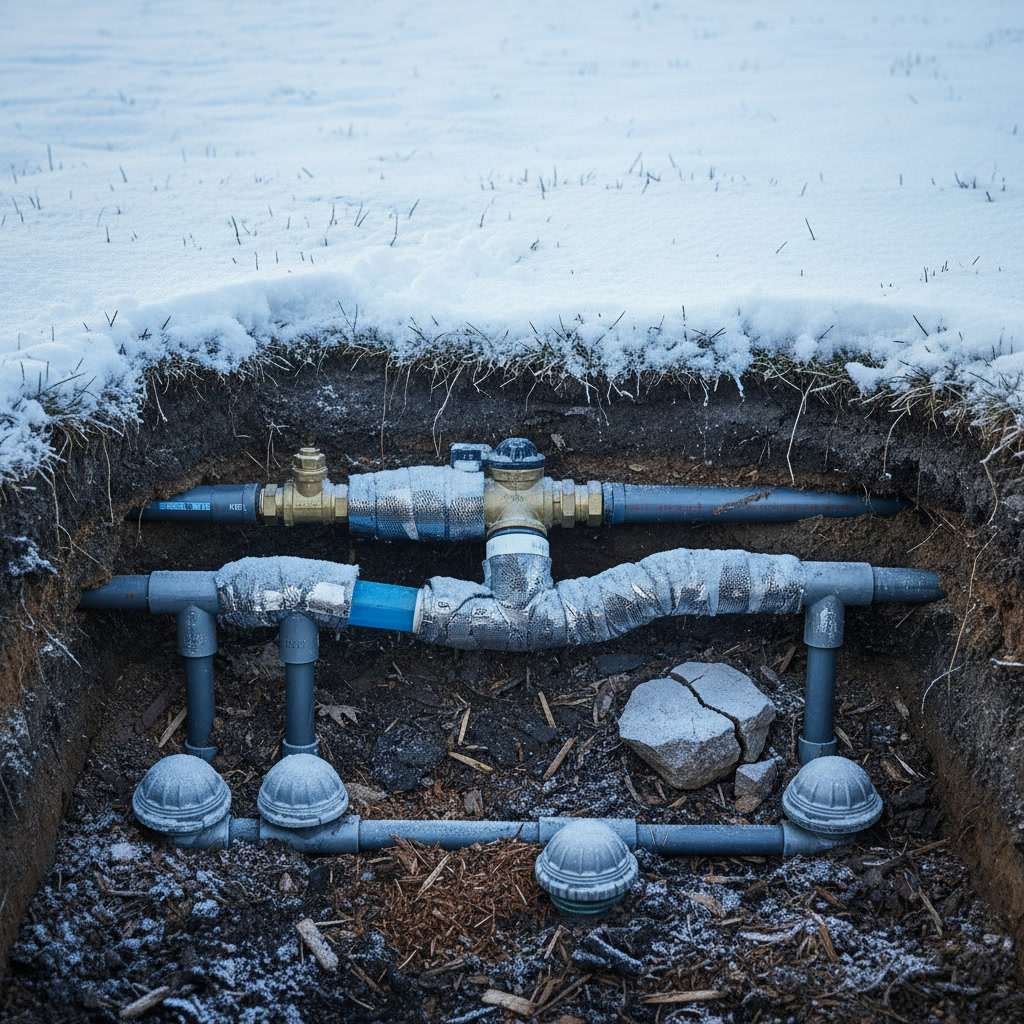
Blowing out irrigation lines before hard freezes prevents the most catastrophic and expensive failures. Water expands roughly 9% when it freezes. That expansion cracks pipes, splits valve bodies, and destroys backflow preventers. A single freeze event can cause thousands of dollars in damage that won’t become apparent until spring startup.
Professional winterization uses high-volume, low-pressure compressed air to clear water from every part of the system. The process requires specific equipment and technique. Too much pressure damages components. Too little leaves water behind. Technicians work zone by zone, ensuring each section is completely evacuated before moving to the next.
The service also includes controller adjustment and valve protection. Controllers switch to rain mode to prevent attempted activation during winter. Vulnerable above-ground components get insulated or drained. These steps ensure the system survives winter ready to perform when spring arrives. Understanding these preventive measures is just as important as knowing the typical costs when repairs become necessary.
How Smart Controllers Reduce Waste Between Service Visits
Modern smart controllers adjust watering automatically based on weather data, soil type, sun exposure, and plant needs. They skip scheduled watering after rain, reduce run times during cool weather, and extend watering during heat waves. This automation can cut water use by 30 to 50% compared to traditional timer-based controllers.
The technology works best when professionally programmed with accurate information about your specific landscape. Each zone needs correct settings for soil type, slope, sun exposure, and plant material. Generic default settings waste water and may not provide adequate coverage where it’s needed most.
Professional installation and setup ensures the controller has accurate data to work with. Technicians measure sun exposure throughout the day, assess soil drainage characteristics, and calculate plant water requirements for each zone. They also verify the controller connects reliably to weather services and updates properly. This level of detail makes the difference between a smart controller that saves water and one that just looks high-tech.
When to Upgrade Components Instead of Repairing
Older systems with brass heads, manual controllers, and imperial-size piping still function but waste water and require constant adjustment. Replacement often makes more financial sense than continued repair, especially when combined with other landscape improvements.
Modern components deliver water more precisely with less waste. New spray heads have better distribution uniformity and wind resistance. Current valves seal more reliably and last longer. Smart controllers eliminate the need for constant manual adjustment. The water savings from upgraded components typically pays for the installation within three to five years.
The decision point arrives when annual repair costs approach 30 to 40% of replacement cost. At that threshold, continuing to repair old components just delays the inevitable while wasting water every month. A professional assessment identifies which zones need complete replacement versus simple repairs. This is particularly relevant when planning broader improvements, similar in scope to projects covered in discussions about common layout errors that undermine efficiency.
The Documentation That Makes Future Service Easier
Professional maintenance includes detailed records of system layout, component specifications, controller programming, and service history. This documentation saves time and money during future visits. Technicians know exactly what parts to bring, where components are located, and what issues have occurred previously.
The records also track pattern changes over time. Pressure variations, increased run times, and recurring problems in specific zones reveal underlying issues that need addressing. A valve that requires adjustment every spring indicates a problem with the valve itself or water pressure in that area. A zone that consistently needs more water than others may have poor soil drainage or inadequate head coverage.
This historical perspective allows proactive solutions instead of reactive repairs. Rather than fixing the same problem repeatedly, technicians identify and correct the root cause. The approach transforms maintenance from emergency response to systematic care that prevents most problems before they occur.
Keeping Your Landscape Investment Healthy Year-Round
Regular sprinkler maintenance protects the larger investment you’ve made in your landscape. Professional installation, quality plants, amended soil, and careful design all depend on consistent, appropriate watering to deliver their full value. An irrigation system that develops mid-season problems undermines everything else you’ve invested in outdoor spaces.
The maintenance schedule that works best for most residential properties includes spring startup with full inspection, a mid-season check in late June or early July, and proper fall winterization. Commercial properties with more complex systems may need quarterly service. Properties with well water or older systems benefit from more frequent checks.
TG Landscaping has provided comprehensive sprinkler repair and maintenance throughout Utah County for more than 15 years, starting with the small repair jobs that taught us how systems fail and what prevents those failures. That hands-on experience informs the thorough maintenance approach we bring to every property today.
Professional irrigation maintenance stops expensive breakdowns before they happen, cuts water waste that inflates utility bills, and keeps your landscape looking its best through the entire growing season. If your system hasn’t been professionally inspected in the last year, or if you’ve noticed uneven watering or higher water bills, schedule a complete system evaluation by calling +13856265019 to protect your landscape investment and avoid mid-season emergencies.